Total Pageviews

Wednesday, May 28, 2014

Moral Code Essay: Designer Babies

       Scientists have been working to create a way that parents could design their baby by picking and choosing different traits they desire their child to have.  They have also studied how they could use such technology that could alter genes so that certain conditions and defects could be removed from a child’s DNA.  I believe that designer babies destroy human dignity and should not be used towards medical advancement until such technology is proved to be efficient.
       Designer babies destroy human dignity.  Humans are not an experiment or a project where parents get to design their own children, it is unethical.  In the article it says, “What if parents could select the traits their children will be endowed with, picking from  a catalog of options like ‘tall,’ ‘high IQ,’ ‘athletic,’ or ‘musical’?”  I believe that human life is a gift from God and should not be messed around with, especially in determining a child’s talents or physical appearance.  In the text it also says, “In Shenzhen, for example, scientists are trying to map out all the genes linked to human intelligence.  The ultimate goal of the project is to be able to test human embryos for IQ so that parents can pick the ones with the most potential.”  Again, I believe that altering genes to create a child with desired traits is unethical and goes against human nature.  Genetically modifying an embryo to have a higher IQ level would create a child with an artificial iQ rather than a natural one.  And I also think that it is horrible that people would want to create a world with genetically modified high IQs and prevent people from being born with other IQ levels because they are undesirable.
      While technology used to create designer babies may also help medical advancement, I believe it should not be used until it is proven that it would be efficient in this use, and that this technology would then only be used for medical use.  In the article it says, “Increasingly sophisticated genetic testing already allows doctors to screen embryos for defects, but this would be the first procedure in which genes are altered to remove unwanted conditions.”  Later on in the article it says, “He fears such procedures could unintentionally cause new, unforeseen genetic abnormalities or accidentally eliminate positive traits.”  Human beings are not an experiment, such procedures could end up damaging a person’s genome.  A human life is not something that should be experimented with.  Until scientists have proven that this technology can eliminate certain defects or conditions from a person’s genome, it should not be used.  And if it is ever proven to be efficient in this medical advancement, this technology should only be used for this purpose.

       Designer babies destroy respect for human life.  Parents should not be able to pick and choose their child’s traits, for human life is a gift from God that should not be tampered with.  As for the use of this technology towards medical advancements, it should not be used until scientifically proven to eliminate conditions of diseases that are inheritable.  If this technology is ever proven it should only be used for this purpose and none other.  Human life is a beautiful thing that should not be tampered with.

Friday, May 16, 2014

Romeo and Juliet Essay

           In Shakespeare’s Romeo and Juliet, a pair of star-crossed lovers from two different ends of a violent family feud end up taking their own lives.  Who is to blame for the deaths of Romeo and Juliet?  Themselves.  Romeo and Juliet chose to commit suicide because they felt that they could not live without each other’s love.
Before Romeo and Juliet’s death scene, the two had pledged that they would rather die than be without their love.  In Act 2 scene 3 line 80 Romeo says, “I have night’s cloak to hide me from their eyes, And, but thou love me, let them find me here.  My life were better ended by their hate than death prorogued, wanting of thy love.”  In this scene Romeo explains to Juliet that he would rather be killed by her kinsman than to live without her love.  Then in Act 3 scene 2 line 63 Juliet says, “O break, my heart, poor bankrout, break at once!  To prison, eyes; ne’er look on liberty.  Vile earth to earth resign; end motion here, and thou and Romeo press one heavy bier.”  In this scene the nurse returns to Juliet with news of Tybalt’s death, but before she explains that it was Tybalt who was killed Juliet thinks she is speaking of Romeo’s death.  What Juliet says here is that without Romeo she, too, wants to die and be buried with Romeo in one coffin.  Before Romeo and Juliet reach the point of death they explain that the only purpose of life now is each other, therefore they pledge that they would rather die than be without each other’s love.
Then in Romeo and Juliet’s death scene they make it clear that the reason for taking their lives is because of love.  They would rather die than be without each other.  In Act 5 scene 2 line 90 Romeo says, “Come, cordial and not poison, go with me to Juliet’s grave, for there must I use thee.”  In this scene Romeo goes to the apothecary to buy poison that he plans to consume at Juliet’s grave.  He says, “Come cordial and not poison,”  when he says cordial he means invigorating drink.  So here Romeo explains that since Juliet is dead, death at this point is a happy escape from living without her.  Then in Act 5 scene 3 line 119 as he is about to consume the poison Romeo says, “Here’s to my love.  O true apothecary, thy drugs are quick.  Thus with a kiss I die.”  Romeo’s last words explain that he is dying for Juliet, as an escape from life without her love.  Then when Juliet awakens in Act 5 scene 3 she says in line 174, “Yea, noise?  Then I’ll be brief.  O, happy dagger, this is thy sheath.  There rust, and let me die.”  When Juliet wakes to find Romeo dead with no poison left to spare for her she takes his dagger and stabs herself.  By saying “happy dagger” she explains that since Romeo is dead, death is also a happy escape for her rather than living without Romeo’s love.  In Romeo and Juliet’s death scene, they both take their lives so that they will not have to live without each other and they make this clear in their dying words.
          While the feud between the Capulets and the Montagues was at fault for many of the decisions Romeo and Juliet made and left them in a very bad situation, the feud was not at fault for their deaths.  They ultimately made the choice themselves to commit suicide to escape from a life without each other and this is the tragedy of Romeo and Juliet.


By Caitlin Crowley

Sunday, March 30, 2014

"Should a Hated Word be Banned?" by Jodi Rudoren

In the article “Should a Hated Word be Banned?” Rabbi Dov Lipman says that “every country has to establish certain value-based limits” to free speech.  Do you agree?  Why or why not?  Use evidence from the text to support your response.
The Yad Vashem, a Holocaust museum in Jerusalem

The article “Should a Hated Word be Banned?” by Jodi Rudoren talks about a proposal to ban the word Nazi in Israel.  Some believe that the word needs to banned because its usage has gotten out of hand, while others believe that the banning of the word goes against freedom of speech.  Rabbi Dov Lipman believes that “every country has to establish certain value-based limits: to free speech.  While the word Nazi has a very defensive demeanor and can be very hurtful to many, it should not be banned but instead its usage needs to be limited.
The word Nazi has started to be used out of context in a hurtful way, even if it is not meant to hurt someone intentionally.  In the text it says, “The proposed law’s backers say it’s a response to the increasingly casual use of terms in everything from Israeli politics to teenage trash talk”.  Usage of this word in contexts like these are inappropriate and can be very hurtful.  Amir Fuchs describes the affects of the law, “if some 15-year-old kid will tell his friend that their teacher is a Nazi, even if it’s a joke, technically it’s a criminal offense.”  While an action like this may not be on a criminal level, there should be a punishment for this.  While it was a joke it could still have the same hurtful affect on the teacher if they were to be called a Nazi intentionally being hurtful.
Although the word Nazi can be very offensive, it should not be banned.  The word has a very important historical background.  In the text it says, “By the end of World War ll in 1945, 6 million Jews had been killed, along with many Gypsies, homosexuals, and others the Nazis considered undesirable.” The word does bring back many devastating memories, but has a very important historical meaning that cannot be forgotten.  In the text it says, “Almost 70 years later, the number of living Holocaust survivors is falling fast.  Fewer than 200,000 remain alive in Israel (and about 120,00) in the U.S).  This word needs to be remembered.  if it is banned it will eventually be forgotten over generations and people will not remember the pain of the time period and history could repeat itself.  It is important to remember the meaning if the word Nazi and its history in the future.
          To conclude, the word Nazi should not be banned because of its important historical background, but its usage should definitely be limited and people who misuse it should be punished.  The word should not be used to intentionally hurt someone, or joke around, but instead to remember a very important time period in the world.

Caitlin Crowley   811

Thursday, February 27, 2014

Sonnet Written by Caitlin Crowley

My fingers trace the stone that reads thy name
As winter's bitter cold gnaws at my hand
Though my body too numb to feel the pain
Lost in agony unable to stand
It claws at my insides leaving deep scars
As I drown lifeless in the waves of despair
I think back to the times that were once ours 
Knowing the future will never compare
Many struggles I will face in this life
Many burdens will I carry through time
The pain will remain, piercing as a knife
But life will get easier as I climb
For God will lead me to glory one night
And in the next world we will reunite

Friday, February 14, 2014

Literary Essay Written in Response to Poems by Martin Espada


          In the poems “The New Bathroom Policy at English High School”, “Two Mexicanos Lynched in Santa Cruz, California, May 3, 1877” and “Revolutionary Spanish Lesson” by Martin Espada power is clearly abused by groups of people in the text.  This abused power can affect others in many negative ways, even if the person in power does not realize it.  These poems help readers understand how abused power on many different levels can have such a negative impact on people.
In the poem, “The New Bathroom Policy at English High School” the principal abuses his power to gain even more power by banning Spanish in the bathrooms.  In the text it says, “The boys chatter Spanish / in the bathroom… and this constipates him / so he decides to ban Spanish / in the bathrooms / now he can relax.”  The principal feels like an outsider when they boys speak Spanish in the bathroom, as if they have some form of power over him.  The principal then decides to use his power as a principal to ban Spanish in the bathrooms.  Now that the boys can’t speak Spanish in the bathrooms, the principal has even more power over them and is relieved.  The principal abuses his power by taking away a part of the boys’ culture  for no other reason but for him to gain even more power.  Using power against someone’s culture strips them of who they are.  The principal gains more power as he turns these boys into people that make him feel more comfortable and more in power.
In another one of Espada’s poems, “Two Mexicanos Lynched in Santa Cruz, California, May 3, 1877”  a group of “gringos” abuse their power and hang two Mexicanos.  In the text it says, “More than the moment / when forty gringo vigilantes / cheered the rope / that snapped two Mexicanos… / dangling in the bowed mute humility / of the condemned, … / remain the faces of the lynching party: / crowding into the photograph.”  In this poem the group of “gringos” abuse their power to the point where they took away the lives of two Mexicanos.  The speaker of the poem describes how the Mexicanos were being forced into a bowing position by the rope.  They were being forced to acknowledge the power of the whites as they were being killed.  The speaker then ends the poem by describing how the group of whites all crowded into the same photograph.  This represents how they were pleased with their power and didn’t think about what they were doing with it, murdering two people.  The “gringos” use their power because they can.   They become so wrapped up in their power and the things they know that they can do with it that they do not think about what they are actually doing.  They abuse their power and take away people’s lives because this gives them even more power.  When they do extreme things with their power, in this case murdering two Mexicanos, they prove to people the amount of power they have.  The more they abuse their power the more they gain.
In the poem, “Revolutionary Spanish Lesson” the speaker of the poem fantasizes about power that he does not possess.  In the text it says, “Whenever my name / is mispronounced, / I want to buy a toy pistol, … / hijack a busload / of Republican tourists from Wisconsin, / force them to chant / anti-American slogans / in Spanish, / and wait / for the bilingual SWAT team / to helicopter overhead, / begging me / to be reasonable.”  The speaker fantasizes about this power he wishes he had so that he could give the whites a taste of their own medicine.  He wants to show them how they abuse their power, by stripping them of their culture.  But when the speaker says, “and wait / for the bilingual SWAT team / to helicopter overhead, / begging me / to be reasonable” he snaps back to reality, where the whites always have more power.  Power that they abuse towards the Latinos.  He wishes for a moment that he had enough power to show the whites how he feels about how they treat him and the others of his culture.  He wishes for a time when the power is reversed and he can rule the whites the way they have ruled him.
         Martin Espada’s poems still relate to today’s world even though much has changed since this time period of discrimination.  There are many leaders in this world today who abuse their power.  They become so submerged in their power that they do not think about their actions.  And sadly, as a result, people are discriminated  against for many different reasons.  In Central Africa ethnic cleansing of muslims has been occurring.  Anti-Balakas, Christian militias have been using their power to ethnically cleanse muslims, which is when a group of people are killed because of their unwanted ethnicity or religion.  This definitely relates back to what occurs in Espada’s poems.  People in Africa are being killed for their culture by people who don’t agree with their culture and have the power to do away with them.   The ultimate abuse of power is when it is used to kill innocent people.    Espada’s poems will continue to be popular and teach readers until the problem of abused power no longer exists in society. 
Martin Espada

Caitlin Crowley 811


Wednesday, January 29, 2014

"Where the Sidewalk Ends" by Shel Silverstein

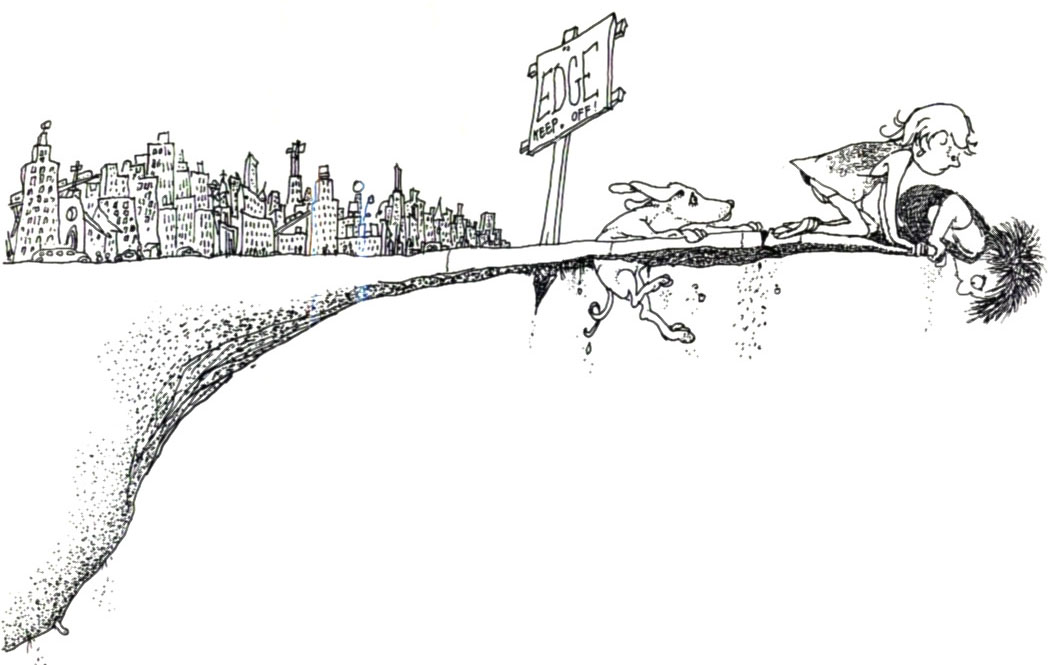
Where the Sidewalk Ends

An illustration by Shel Silverstein based off of his poem
There is a place where the sidewalk ends
And before the street begins,
And there the grass grows soft and white,
And there the sun burns crimson bright,
And there the moon-bird rests from his flight
To cool in the peppermint wind.

Let us leave this place where the smoke blows black
And the dark street winds and bends.
Past the pits where the asphalt flowers grow
We shall walk with a walk that is measured and slow,
And watch where the chalk-white arrows go
To the place where the sidewalk ends.

Yes we'll walk with a walk that is measured and slow,
And we'll go where the chalk-white arrows go,
For the children, they mark, and the children, they know
The place where the sidewalk ends.

Shel Silverstein


Response:

          The poem "Where the Sidewalk Ends" by Shel Silverstein relays a theme to the reader, the children of our generation are the ones who can make a difference in the world.  This poem may seem to directly point out the problem of pollution, but it could apply to something larger, such as world peace.  Very often lines in poems symbolize something, mean more than what they do literally, like this one by Silverstein.
          Silverstein points out problems that we have in our world today and compares it to the world beyond the sidewalks that we are familiar with.  In the text it says, "Let us leave this place where the smoke blows black and the dark street winds and bends.  Past the pits where the asphalt flowers grow."  These lines specifically point out pollution and how our world has turned into a man-made place rather than nature.  Shel Silverstein also describes the world beyond the sidewalks he writes, "And there the grass grows soft and white, and there the sun burns crimson bright, and there the moon-bird rests from his flight to cool in the peppermint wind."  As he compares and describes both of these societies we really begin to see what Silverstein is comparing, a man-made world and nature.  Silverstein makes it clear that nature is better than a man-made world.  Silverstein's descriptions can also be applied to something larger, like world peace.  The way Silverstein describes these aspects of nature it brings a peaceful feeling to the reader.  While the man-made world seems kind of destructive.  Silverstein could be trying to get to the idea of world peace, a world beyond the one destroyed by man today.
          Silverstein then concludes the poem by explaining who can solve this problem, children.  In the text it says,"And we'll go where the chalk-white arrows go, for the children, they mark, and the children, they know the place where the sidewalk ends."  Silverstein is saying here that the children of our generations are the ones who can make a difference in our world, the ones who can lead the way to a new world.  When he writes about following the white-chalk arrows I think he is referring to the way children write with chalk on the sidewalks, something that we associate children with.  We as a world will follow the children who have the ability to lead the way to a better world.  Silverstein also writes, "Yes we'll walk with a walk that is measured and slow,"  What Silverstein means by this is that making this large change to our world will take time to accomplish.
          This poem still applies to our world today since we still face the problems of pollution and world peace.  Shel Silversteins words tell us that children in to step in and lead the way to a better world and the rest will follow.  If the children of our world today begin to take the steps that solve the problems we face in today's society we can make the world a much better place to live.  The next generation will change the world for years to come and if we start to take steps in the right direction slowly we will be able to solve our problems and create a world of peace.  


Friday, January 24, 2014

"Justin Bieber Arrested on Drunken Driving, Resisting Arrest Charges" by Alan Duke

"Justin Bieber Arrested on Drunken Driving, Resisting Arrest Charges" by Alan Duke

          Justin Bieber was arrested on Thursday after he was caught driving drunk, wouldn't cooperate with the police and admitted to marijuana use.  In the article "Justin Bieber Arrested on Drunken Driving, Resisting Arrest Charges" by Alan Duke, Justin Bieber's arrest is thoroughly explained and really makes me think about the example celebrities are setting for the fans that look up to them.  Some celebrities, especially ones that have younger fans are setting a very bad example for our society.
          Justin Bieber was caught driving drunk without a valid license and when pulled over he used foul language towards the policeman and refused to follow the policeman's instructions.  In the article it says, "He allegedly ignored a police officer's request to keep his hands on the car while he did 'a cursory pat down for weapons,' the report said." Bieber refused to follow instructions and continued to question the officer for why he was being pulled over.  Bieber later admitted to using drugs.  In the text it says, "Bieber 'made some statements that he had consumed some alcohol, and that he had been smoking marijuana and consumed some prescription medication,' Martinez said."  This piled on even more to Bieber's mistakes.  As if this wasn't bad enough, Bieber was not only drunk and driving but was over speed limit by almost 30 mph.  He wasn't just endangering his life, but others around him.  In the article it also says, "He strutted out of the jail dressed in black, with a baggy hoodie covering his head. His pants appeared to be baggy leather. Bieber briefly sat on top of a black Cadillac Escalade, where he waved to screaming fans, before he was chauffeured away."  Even after he was released from jail his fans were still there, and still looking up to him.
          Justin Bieber has many fans that see him as a role model.  Many of his fans probably have a dream to make it to the celebrity world one day just like he did and find his story of becoming famous inspiring.  Are these the kind of celebrities we want the kids of our generation to look up to and be inspired by?  The ones that get arrested for drunken driving, or the ones that use drugs, or the ones that wear inappropriate clothing?  I feel that there are too many celebrities that act in immature ways in today's society.  A true celebrity is someone who sets a good example for others and is truly inspiring and talented.  People like Justin Bieber or Miley Cyrus just look like brats to me, definitely not people worthy of being role models for younger fans.
          I don't care how talented people believe Justin Bieber is, behaving in this way is just downright inappropriate and unacceptable.  It disgusts me that such unbecoming people are influencing and acting as role models for young people in our society.
          

Wednesday, January 15, 2014

Contaminated Water in West Virginia

"West Virginia Company Behind Water Contamination Cited at Second Facility"
          The article "West Virginia Company Behind Water Contamination Cited at Second Facility" talks about a company that contaminated 300,000 people's water supply in West Virginia.  Freedom Industries' second facility has made five violations during this leak.  Their company may need to relocate and start from scratch to create a more reliable and safe containment plan.  I think it is ridiculous that our companies are contaminating our own supply of drinking water while people in other countries face contamination caused by the environment.  If we would be more cautious with such serious chemicals we wouldn't be putting ourselves in such a horrible situation.
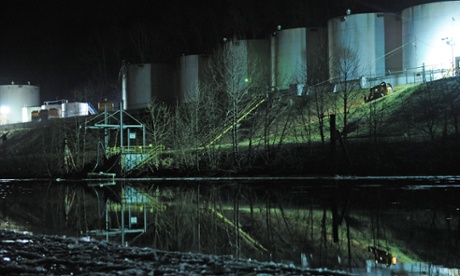
       This specific contamination has caused 300,000 people's water supply to be contaminated.  In the article it says, "During the 7,500-gallon spill there (Charleston site)  Thursday, a cracked containment wall allowed the chemical to ooze into the Elk River. Freedom Industries then moved the Charleston site's remaining 70,000 gallons to Nitro, which isn't near a river or water supply."  Then when inspectors visited the Nitro site they found five violations.  The chemical that leaked at the Charleston site pooled up in the ditch which later on led to the Elk River where it contaminated many peoples' drinking water.  In the text it also says, "the Nitro site lacked appropriate last-resort containment to stop chemical leaks."  Obviously Freedom Industries wasn't doing something right.  They moved their chemical containment system to the Nitro site after a leak occurred at the Charleston site but still failed to take the proper contamination precautions again at the new site.
West virgina
Leak of chemicals into the Elk River contaminating
drinking water in West Virginia
       The idea that our companies and industries have reached the point where they are contaminating people's drinking water is ridiculous to me.  People in other countries face the problem of contaminated water everyday due to the environment while we are putting ourselves in that horrible position.  In the text it says, "The facility had no documentation of inspections of the Nitro site. Nor did it have proof of employee training in the past 10 years, the report said."  This leak may have been avoided if inspections had taken place and employees were properly trained.  How can we put such little effort into something as important and serious as water supply contamination.  In the text it also says, "It's unclear whether the state had inspected the Nitro facility before Monday. The facility violated its stormwater permit, which doesn't require routine inspections, Aluise said."  This makes me really surprised.  I don't see any reason why facilities like this one are not inspected, especially if they can cause destruction like this.
       My picture book was inspired by the topic of pollution and how pollution is caused by humans.  These are dangerous real life situations that can affect people in really harsh ways.  We need to work to do whatever we can to stop pollution, especially if it just means inspections on facilities.  If we do this we can hopefully stop pollution like this before it becomes a danger to people. 
       

Wednesday, December 18, 2013

The Hunger Games- Mockingjay by Suzanne Collins

Mockingjay by Suzanne Collins

Who has "power" in your text?  How does that power get shown?

          In my book Mockingjay by Suzanne Collins, a corrupt government has the power.  The people living in the Capitol are part of the government and have control over the 12 districts the make up Panem.  
          It is very clear that the government has power in this story because of how this power is shown.  One way this power is shown in economically.  The government has fancy clothing, a surplus of food, and technology while people in the districts have to eke out a living day by day.  The government is so caught up in their power and wealth that they do not work to help their people, in fact they use the people for their entertainment.  Every year the government holds this thing called the hunger games in which one male and one female adolescent are picked from each of the twelve districts and all the people picked battle to the death in an arena created by the government.  This is just another way the government's power is shown.  They have control over the people of Panem and use them for their entertainment.
           Even though I am at the beginning of Mockingjay there is plenty of foreshadowing and discussion of a shift in power.  People in the districts have started to rebel against the government in rallies.  The main character, Katniss has decided that she will lead the people in their fight, even if it means starting a war between the government and the people.  They are sick of being used by the government as a form of entertainment and want justice.  The only way this seems possible is to overthrow the government.
            Suzanne Collins teaches readers about a conflict that occurs in the world today, corruption.  She teaches us that if power falls into the wrong hands horrible things happen, in this case treating people in inhumane ways.  It really makes you think about the world today and the corruption that occurs, that if we don't take hold of this problem now it can get way out of hand.  The problem of corruption has occurred in the past also,  and often the people that were under these corrupt dictators were hurt or killed.  Suzanne Collins writes this story to show us how power hungry people can take over the world and do evil things.


By Caitlin Crowley   811

Wednesday, December 11, 2013

Social Justice and Fairness- The Okay Book by Todd Parr Response


The Okay Book by Todd Parr

How different are people allowed to be in this text?  Does it assume everyone is happy and good in the same ways?

               The Okay Book by Todd Parr talks about how it is okay to have different characteristics.  It teaches kids that it is okay to be different from other people.
               People in this text are allowed to be very different.  In the text it says, “It’s okay to be short, it’s okay to wear two different socks, it’s okay to come from a different place, it’s okay to cry, it’s okay to live in a small house…” the author then goes on to list all different groups that it is okay to be a part of.  The author makes it very clear with the repetition of “it’s okay to,” that being a part of all these different groups is okay.  Even though in this specific book there is no conflict, it lists a bunch of things people get discriminated against for and even incorporates some other problems such as economic issues.  Even the way people act and the lessons that are taught from this book revolve around these problems.  For example when the author writes, “it’s okay to be a different color” it clearly brings up the problem of racial discrimination.  When he writes, “it’s okay to live in a small house” he brings up somewhat of an economical issue, people who can’t afford big homes.  When the author writes, “it’s okay to be skinny” he brings up the issue of discrimination of physical appearance.  This book hints at many social issues and allows people to be very different.
                The author does assume that everyone is happy and good in the same ways.  Each sentence the author wrote introducing a new problem; he began with “it’s okay.” By using these same words for each and every issue he shows that they are all equally okay and accepted.  What the author does not show is the side where these people are not looked at as equals because of their differences.   But this is okay because younger kids wouldn’t understand the story anymore if the author had added this component.  The same lesson is still being taught whether or not this point of view is shown.  It doesn’t change the theme of the book.  His theme is simply it’s okay to be different.
                 Overall, The Okay Book allows people to be very different, and have different characteristics.  The author Todd Parr also allows all people in all groups to be happy in the same ways.  He shows the side where people of all different groups are equal.


By Caitlin Crowley 811

Wednesday, December 4, 2013

Reading Through a Lens of Social Justice- The Ugly Duckling Response


The Ugly Duckling from Landoll’s Fairy Tale Classics
One summer Mother Duck had a nest full of eggs.  The nest was near a pond, where cattails grew and dragonflies flew.  Mother duck sat on her eggs to keep them warm, until the day when they would hatch.  When that day came, little ducklings climbed out of their shells and ran around, filling the air with the sound, ‘cheep-cheep-cheep-cheep.”  But there was one egg that didn’t hatch with the rest.
            When the last egg finally hatched, out came a duckling quite different from the others.
            “There’s a funny duckling,” Mother Duck thought to herself while they were swimming one afternoon.  “This one is white instead of yellow, and a little bigger than the rest.”  Even so, Mother Duck loved her special duckling.
            But the others weren’t so nice.  “Look at you!” said a grown-up duck one day.  “You’re an ugly duckling.  You don’t belong here with the rest.”  The grown-up duck pushed away the odd duckling with its beak.
            After that, things grew worse.  The other ducklings liked to tease their strange brother.  They would nip him with their beaks and call him names.
            “You’re the Ugly Duckling!” they would yell.  Of course, this made the Ugly Duckling very upset.  All he wanted was to be liked.
            Even the wild songbirds scattered whenever the Ugly duckling came near.  “Look out, look out, it’s the Ugly Duckling!” they yelled, flying away from him.  “I must be one ugly bird,” thought the sad Ugly Duckling.  “I’m so ugly I don’t even have a friend.”
            Without any friends, the Ugly duckling had to swim by himself.  One day, all alone, he saw a flock of larger birds flying above the water.  “Look at them,” he said.  “They’re so beautiful—the shape of their wings, the color of their heads, the way they glide through the air.” He sighed.  “And I am just an Ugly Duckling.”
            The seasons changed from summer to fall, then came cold winter and green spring.  Through them all, the Ugly duckling was on his own, unable to find a friendly face.  It was a miserable thing, being alone and feeling ugly.
            One night in early spring, under the light of the full moon, the Ugly Duckling saw another flock of beautiful birds.  They were flying through the sky, glowing in the moonlight, and the Ugly Duckling squawked to them: “I wish I was as beautiful as you!”
            But the Ugly Duckling was in for a surprise.  That spring, a remarkable change occurred in him.  First, his stubby little wings had grown long and strong, and with these he had learned to fly.  The Ugly Duckling was proud.  “I’m not a duckling anymore,” he thought to himself.  Then he wondered, “I don’t feel ugly—and if I don’t feel ugly then I must be fine.”  Then one day he flew down toward a group of elegant swans with long, curving necks.  He landed near them, thinking they might hiss at him of fly away.
            Instead, the swans approached him.  As they swam closer, the Ugly Duckling felt afraid because he thought he might be attacked.  “ What a lovely creature you are,” they told him.  The Ugly Duckling felt embarrassed.  He thought they were mocking him.  But when he looked down in shame, what did he see?  His reflection on the water—it was the face, neck and body of a beautiful swan.  “Why yes,’ he said, gazing at his reflection.  “I am a lovely creature.  And most importantly, I feel like a lovely creature.”


Response:

            The Ugly Duckling is a very popular children’s fable.  It is obvious that the book teaches a lesson about some form of discrimination, or for younger children, teaches to treat others the way you want to be treated.  But the book has hidden signs of discrimination that might be hard for younger children to pick out.  The book specifically hints towards racial discrimination.
            One way this book hints towards racial discrimination is because the duckling is treated differently because of the color of its feathers.  This is one of the more obvious hints to older kids, but younger kids might not be able to pick that up.  In the text it says,” This one is white instead of yellow.”  Another way this book hints towards racial discrimination is showing that the duckling was discriminated by a grown—up duckling.  This shows that it was more than just being teased by kids, it was discrimination on a larger level, being teased by all people, or in this case ducks.  In the text it says, “You’re an ugly duckling.  You don’t belong here with the rest.’ The grown-up duck pushed away the odd duckling with its beak.”  The grown-up duck not only made fun of the duckling because of its feathers, but also pushed it away and told it that it didn’t belong with the rest of the ducks.  This really shows discrimination, showing that the grown-up duck told the duckling that it didn’t belong with the other ducks because of the way it looked points out racial discrimination to the reader.
            The author also reminds the reader of the racial problems that occurred in the United States in the 20th Century.  In the text its says, “The other ducklings liked to tease their strange brother.  They would nip him with their beaks and call him names.”  First of all I think it is symbolic that the author writes that his brothers started to discriminate the duckling.  I think this symbolizes the idea that African Americans, whom were American citizens, were being discriminated by other American citizens, by their own brothers.  Another thing the author writes is that the other ducklings nipped at him and called him names.  What I think the author is trying to hint at here is the violence that occurred and how African Americans were physically abused because of their skin color.  While obviously it isn’t as brutal here, it still hints at this.  The name calling also relates to the time period, with all the horrible names that African Americans were called.
            At the end of the book the duckling realizes that just because he was treated differently and discriminated against because of his feather color, he shouldn’t live feeling bad about himself and dwelling on the fact that he is different.  Instead, he learns that he is just as beautiful as all the other ducklings.  This relates to racial discrimination in the United States.  African Americans stayed strong through the time period of discrimination, knowing that they were equal to all people and because of their persistence they finally achieved their rights as equal American citizens.
            The Ugly Duckling teaches an important lesson to children, to treat others the way you want to be treated, but for older kids several hints towards racial discrimination can be found.  


By:  Caitlin Crowley  811

Wednesday, November 20, 2013

Writing for Social Justice


I, Too
I, too, sing America.

I am the darker brother.
They send me to eat in the kitchen
When company comes,
But I laugh,
And eat well,
And grow strong.

Tomorrow,
I’ll be at the table
When company comes.
Nobody’ll dare
Say to me,
“Eat in the kitchen,”
Then.

Besides,
They’ll see how beautiful I am
And be ashamed—

I, too, am America.


            “I Too” by Langston Hughes was written in 1945, before the Civil Rights Movement began.  His poem reflects his hope for a day when all people will be able to sit at the same table.  In the poem the narrator says, “They send me to eat in the kitchen when the company comes, but I laugh, and eat well, and grow strong,” these words symbolize that the narrator will not give up.  He will keep his head held high and strong and hopes for a day when all people are treated equally.  While this poem was written in hope of civil rights, it does not have a rebellious tone against the United States.  When the narrator says, “I, too, am America” he makes it clear that he is an American like all others and is proud to be an American.   He believes that all Americans should be treated equally.

Monday, November 11, 2013

Banning Books Essay- Letter to Ms. Berner


Dear Ms. Berner,
I have read multiple articles and watched many videos on the topic of book banning, which have helped me take a position on banning books in sixth grade classrooms.  Books should not be banned from sixth grade libraries because it limits what children can read.  However, students should be warned that a book is intense or may be inappropriate and should get their parents’ permission to read it.
            By banning books, people end up making choices for others, telling students what they can or cannot read.  Ellen Hopkins described her view on banning books, “If you don’t like the content in a book, don’t read it.  If you don’t want your child to read a book, take it away, but you do not have the right to decode ‘appropriateness’ for everyone.”  I agree with Ellen Hopkins.  Banning books limits what people can read and hinders people from making their own personal choices, or takes away a parent’s right to make decisions for their child.  In a video we watched, “Book Under Fire”, Deborah Wrigley covered an attempt to ban the book Fahrenheit 451 at a school in Montgomery, Texas.  A girl named Diana Verm was given the book as a reading assignment and stopped reading the book after the first few pages, telling her teacher that she was offended by the burning of the Bible that occurred.  The teacher then gave Diana a separate assignment, but Alton Verm, Diana’s father, wanted the book to be banned from the entire school.  He is not a superior parent, so why should he be able to make choices for others?  He didn’t want his daughter to read the book and that’s fine but that doesn’t give him the right to take the book away from everyone else. 
            That being said, I do believe parents have a very important role in their child’s reading life especially when it comes to making decisions about what their child can or cannot read.  Staff at the Glen Ellen school in district 41 have ensured a way for this to happen by sending out a letter to parents, “ at the beginning of the school year, parents would be asked to sign a letter that allows their child to access book from their classroom library.  The letter also allows parents to tell a teacher in writing if there are any subjects or books they want to keep out of their child’s hands.”  I agree with this idea and it might even be one of the best ways to keep parents satisfied with what their child is reading without banning certain books for everyone.  Jenna Obee, a young adult specialist at Standley Lake Library also agrees saying, “My job is to help children find the book they want to read, the parents job is to help children decide what they should read.”  People who are against book banning are not telling parents to stay out of their child’s reading life, but simply want to prevent them from making choices for other parents. 
            While I strongly believe that parents have a big part in their child’s reading life, others believe that parents cannot control what their children should read because they learn important life lessons from these books.  Sherman Alexie says, “And now I write books for teenagers because I vividly remember what it was like to be a teen facing everyday and epic dangers. I don’t write to protect them.  It is far too late for that.  I write to give them weapons-in the form of words and ideas-that will help them fight their monsters.  I write in blood because I remember what it felt like to bleed.”  While I do agree with what Sherman Alexie is saying, that kids learn lessons from these books I still believe that it is ultimately the parent’s decision on what their child reads.  Some parents may decide that their child can read these provocative books and others may decide to keep these books away from them for their own reasons.   People have to accept that there is no questioning what a parent decides for their child.
            Books should not be banned from sixth grade classrooms because it limits what children can read, especially if children are learning important life lessons from these books.  But parents should have the final decision on what books are right for their children.   Books should not be banned from the classroom but questionable books should be brought to the child’s parents for approval.  This way parents are keeping their children away from books they deem inappropriate but not preventing other children from reading them if their parents don’t have the same concerns about the books.   “Censorship, like charity, should begin at home, but unlike charity, it should stay there.”- Clara Boothe Luce
Sincerely,                                                                                                                                                    

Caitlin Crowley

 Works Cited
Alexie, Sherman. "Why the Best Kids Books Are Written in Blood." (n.d.): n. pag. The Wall Street Journal, 9 June 2011. Web. 20 Oct. 2013.

Book Under Fire. Perf. Deborah Wrigley, Alton Verm, and Diana Verm. Channel 13 ABC, n.d. Web. 23 Oct. 2013.

Hopkins, Ellen. "Banned Books Week 2010: An Anti-Censorship Manifesto." (n.d.): n. pag. Huffington Post, 30 Sept. 2010. Web. 24 Oct. 2013.

Porter, William. "Teen Fiction Plots Are Darker and Starker." (n.d.): n. pag. The Denver Post, 8 Oct. 2013. Web. 24 Oct. 2013.

Slivinski, Krystyna. "D41 Slated to Reconsider Ban on 'Perks of Being a Wallflower'"                              (n.d.): n. pag. 24 May 2013. Web. 23 Oct. 2013. 

Sunday, October 20, 2013

Unwrapping a Line- A Summer to Die by Lois Lowry


A Summer to Die by Lois Lowry- Unwrapping a Line
            “I watched as he walked toward home, pushing the grass aside with his heavy stick, and realized that he was leaning on it as he walked, that he needed its support.”
            This line is seems to be a simple observation by the main character, Meg, but it is so much more than that.  In the book A Summer to Die by Lois Lowry, Meg loses her sister to cancer and learns how to move on in life, but never forgets the person her sister was.  The observation Meg has above of her elderly neighbor helps her learn an important lesson, to understand and accept that in life there are struggles and tragedies that eventually everyone will face.
Development: Synthesis Page
            The way the author, Lois Lowry worded Meg’s observation really helps the reader see how it helped Meg understand what Ben, another neighbor, tried to teach her about life.  For example in the text it says, “pushing the grass aside with his heavy stick.”  By describing that he is pushing the grass aside with his stick symbolizes that when we face struggles in life we have to push through them in order to move on with life.  Lois Lowry goes even further than that, describing the stick as heavy.  By doing this she implies that struggles are heavy and pushing through them isn’t easy.  Overall this part of the quote teaches reader that facing struggles is hard, but we have to push trough them in order to move on with life.
            Another way Lois Lowry worded the observation to help readers see the lesson hidden in the line is by saying, “and realized that he was leaning on it as he walked, that he needed its support.”  This shows how through struggles we need someone to help us, someone to lean on.  With the support from others, it makes it easier for people to face their problems, than to face them alone.  I think it is important for people to learn this, not only do we have to push through our struggles, but we have to let people help us through our problems.  Overall, from this one sentence the reader can learn so much about the lesson being taught.
            The lesson Meg learns in this book really helps her through the struggle of her sister’s death.  She learns that in life bad things do happen, but she has to push through her struggles with the help of her friends and family.  Lois Lowry also wants her readers to apply this lesson to their own lives, like Meg did.  People face struggles everyday from something as small as fighting with a friend to something as big as cancer.  Just think about all the people today walking in all boroughs in the Making Strides For Cancer Walk to raise money for the cure of breast cancer.   Many people are facing this problem today.  Yes, cancer is a big struggle and a big fight, but people push through their problems with the support of others and are able to draw strength from others and face their problems.   By applying this lesson to our own lives, we can face our problems and even overcome them.

By Caitlin Crowley 811